


Context matters as much as the data
A harsh-braking alert appears in the transport office. It might show risky driving, or it might show a driver avoiding a cyclist who pulled into the road. Driver behaviour monitoring without losing driver trust depends on checking that difference. Data on speeding, braking and idling can help fleets identify patterns and decide where support or training is needed, but drivers should know what is collected, who can see it and how it will be used. Clear policies and conversations based on context allow operators to improve safety without treating every alert as proof of poor driving.
What fair monitoring looks like
Drivers should know what information is recorded, why it is needed and who can access it. Managers should look for patterns and consider the route, schedule and circumstances before deciding that an event shows poor driving. The same data can also support a driver’s account of an incident or complaint. Used this way, behaviour monitoring helps fleets identify repeated speeding, harsh braking and idling without turning every alert into a disciplinary matter.
Prozkoumejte sledování vozidel TrafficAngel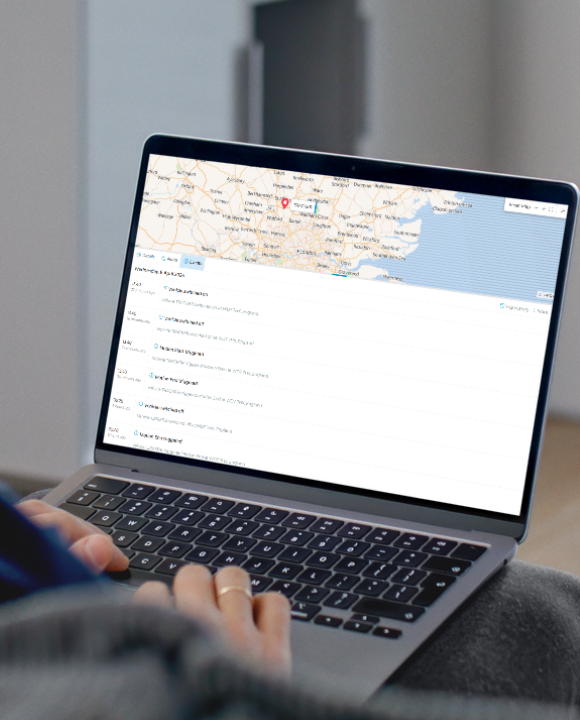
What fleet data actually records
Drivers need a clear explanation of what the system records, who can access it, and how it will be used. The information available depends on the equipment fitted and how the platform is configured, so any differences between vehicles should also be made clear.
1. Location and journey history
The vehicle’s latest reported location, the routes it has taken, its stops and its journey times.
4. Selected vehicle information
Depending on the vehicle and system, selected vehicle statistics and health information may also be available. This should be clearly separated from information used to review driving behaviour.
2. Driver behaviour events
Speeding, harsh braking and excessive idling can be flagged for review, with each event considered in context.
5. Camera footage where fitted
Compatible LiveDrive camera systems provide access to live and recorded footage alongside the vehicle’s GPS tracking data.
3. Geofence crossings
The system can record when a vehicle enters or leaves a defined area, such as a depot, customer site or yard.
Why one event needs context
A harsh-braking alert shows that the vehicle decelerated beyond a configured threshold. It does not explain why. The driver may have been avoiding another road user, responding to congestion or dealing with an unexpected hazard.
Before taking action, managers should check the time, location and route, along with camera footage where it is available.
Look for repeated patterns
A single event should not be treated as proof of poor driving. Repeated alerts across comparable routes and shifts provide a better reason to review what is happening.
Comparisons also need to account for differences between vehicles, loads and types of work. A driver completing urban deliveries cannot be assessed fairly against someone travelling mainly on motorways.
Check whether the route is contributing
If several drivers trigger similar alerts at the same location, the cause may be congestion, roadworks, the road layout, a difficult collection point or an unrealistic timetable.
If the pattern follows one driver across different routes and vehicles, a conversation or additional training may be appropriate. Behaviour data should be considered alongside footage, incident reports, near misses and relevant vehicle records before conclusions are drawn.
Meeting the data protection requirements
When telematics data relates to an identifiable driver, it is personal information and its use counts as worker monitoring. Under the ICO’s guidance on monitoring workers, operators must define their purpose and lawful basis, ensure the monitoring is necessary and proportionate, and collect only the information they need. Drivers and passengers must be told what is recorded, how it will be used, who can access it and how long it will be kept. Driver behaviour monitoring is considered high risk, so a data protection impact assessment must be completed before it begins.
Involving drivers before monitoring begins
The ICO also says employers should seek and document workers’ views before introducing monitoring, unless there is a good reason not to. Drivers should be able to explain or challenge information that may be inaccurate or misleading. Consultation is not the same as relying on consent, which is rarely an appropriate lawful basis in an employment relationship. The guidance is currently under review, so operators should check the latest version before introducing or changing a monitoring policy.
Introducing monitoring with driver support
The equipment does not need to change, but the way it is introduced matters.
Brief drivers before installation
Explain why monitoring is being introduced, when it will begin, what will be recorded and who will have access to the information.
Test the settings before assessing performance
Check that event thresholds suit the vehicles, routes and work involved. Driver feedback can help identify alerts that need reviewing, although some settings may be determined by the system or safety requirements.
Let drivers see and explain their data
Drivers should be able to review events attributed to them and provide context or challenge information that may be inaccurate.
Use the evidence both ways
Tracking data and footage can support a driver’s account of an incident or complaint, as well as identify patterns that may require coaching.
Treat driver rankings carefully
If scores or comparisons are used, the purpose and calculation should be explained. Drivers completing different routes or types of work should not be compared as though their conditions are identical.
Where data can support the driver
Monitoring data is not only useful for identifying risk. GPS location, speed and journey records can show the vehicle’s reported movements, while LiveDrive footage can provide visual context where cameras are fitted.
Together, this information can help investigate an incident or complaint and support the driver’s account when different versions of events are given. It does not automatically determine fault, but it gives the fleet, insurer or police a clearer record to review. Using the evidence consistently also shows drivers that monitoring can protect them from incorrect allegations as well as identify areas for improvement.
View Fleet Cameras and Dash CamsMaking monitoring part of fleet management
Driver behaviour monitoring should become part of routine fleet management rather than a short-term campaign. Reports can be reviewed at consistent intervals, with repeated patterns raised in individual conversations. Coaching should address a specific behaviour and its context, while improvements should also be recognised. If the data changes, managers should ask what has happened before assuming the cause.
Road-risk guidance from organisations such as RoSPA supports a planned approach to managing drivers, vehicles and journeys. Behaviour data gives operators evidence they can use as part of that process. Improvements in driving can also help reduce unnecessary idling, fuel use, brake and tyre wear, and the risk of incidents.
Setting up driver behaviour monitoring
Driver behaviour monitoring without losing driver trust depends on clear communication, fair interpretation and consistent follow-up. TrafficAngel can configure vehicle tracking and reporting around the fleet, the work it carries out and the information managers need. Call 01825 768 555, e-mail sales@trafficangel.co.uk or contact the TrafficAngel team to discuss a suitable setup.
Kontaktujte násČasto kladené otázky
Yes, provided the operator complies with data protection law. This includes having a defined purpose and lawful basis, using necessary and proportionate monitoring, informing drivers and completing a DPIA. The ICO’s worker-monitoring guidance explains the requirements.
It depends on how the vehicle may be used. If private use is permitted, the ICO says monitoring during that time will rarely be justifiable. The system may need a privacy setting or another way to stop private journeys being recorded.
Operators can give drivers direct access or provide regular reports. Drivers also have the right to request copies of their personal information through a subject access request, although limited exemptions may apply. They should be able to explain or challenge data that may be inaccurate or misleading.
It may form part of the evidence, but an alert should not automatically be treated as proof of misconduct. The data must be accurate, used for a purpose drivers were told about and considered alongside the circumstances. The driver should have an opportunity to respond.
Not automatically. Telematics may help demonstrate how driving risk is being managed, while camera footage can provide evidence when a claim is investigated. Any effect on premiums or policy terms depends on the insurer, so operators should check before including a saving in their business case.


