


Different warnings for different risks
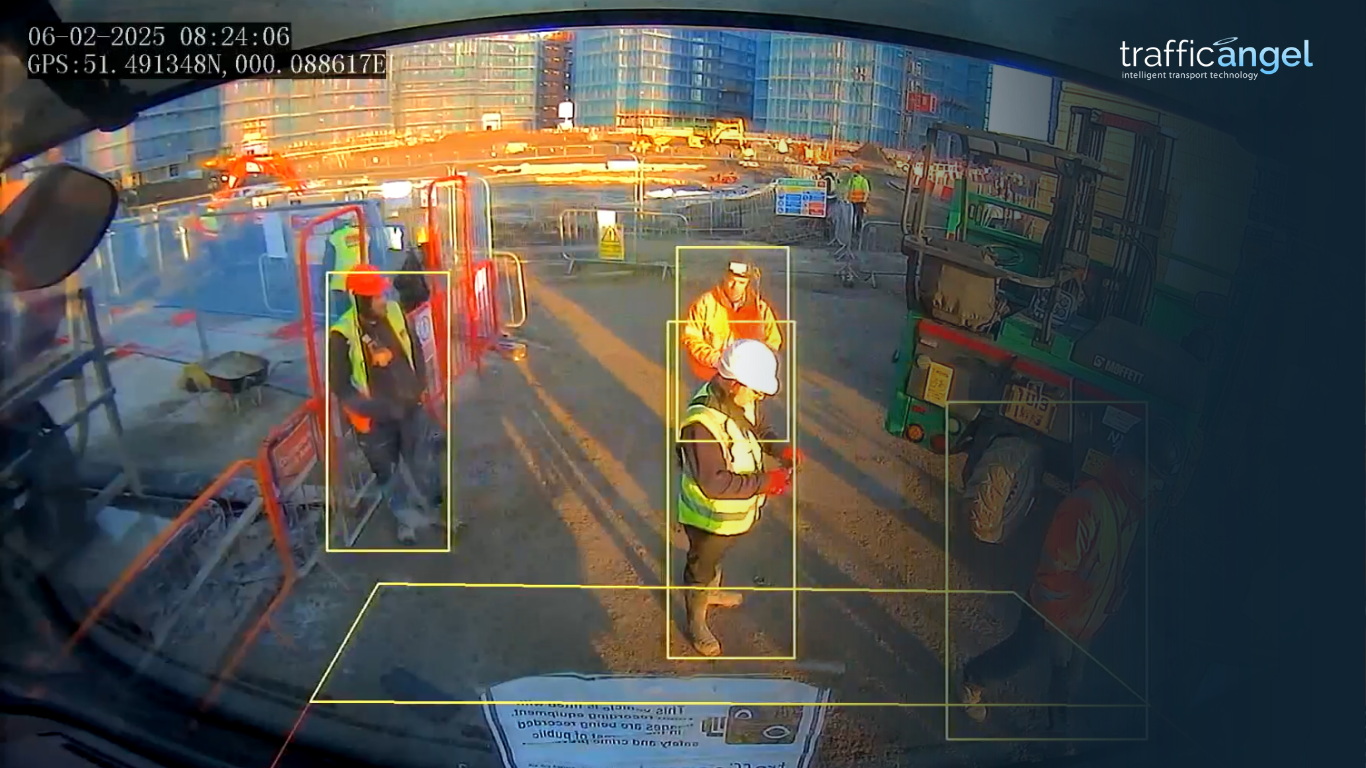
A cyclist moves into the nearside blind spot just before an HGV turns left. A groundworker walks behind a tipper as it begins to reverse. A pedestrian crosses in front of a cab as the vehicle pulls away. In each situation, the driver needs enough warning to react, while the person outside the vehicle needs to know that it is about to move.
Understanding how HGV proximity sensors and turn alarms work together matters because each system performs a different job. Proximity sensors detect a person or object close to the vehicle and alert the driver. Turn and reversing alarms warn people outside the vehicle, while safety lighting can make the vehicle or surrounding working area more visible.
Each system also has limitations. Effective coverage depends on choosing equipment suited to the vehicle, its blind spots and the conditions in which it operates, as well as meeting requirements such as the Progressive Safe System where these apply.
View Our Sensor Systems
The short answer
Proximity sensors monitor defined areas around the HGV and warn the driver when a person or object is detected. Turn alarms warn cyclists, pedestrians and site workers outside the vehicle that it is turning. External warning lights can add a visual warning, while work lights illuminate the surrounding area during low-light manoeuvres.
The systems support one another, but they are not interchangeable. A sensor does not necessarily warn the person outside the vehicle, while an alarm does not tell the driver that somebody is in a blind spot.
Under the Progressive Safe System, vehicles within scope must have compliant blind spot and moving-off detection systems, a camera monitoring system and an audible turn warning. General warning lighting does not replace any of this equipment.
Three types of HGV warning equipment
Sensors alert the driver, alarms warn people outside the vehicle and lighting improves visibility. The equipment required depends on the vehicle, how it is used and any safety standards that apply.
Sensors warn the driver
Proximity sensors mounted at the front, nearside or rear monitor defined areas around the vehicle. When the system detects a person or object, it alerts the driver through an in-cab display, buzzer or both.
Conventional sensors may respond to different objects within range, while more advanced detection systems can identify specific vulnerable road users and reduce unnecessary alerts.
Alarms warn people outside the vehicle
Turn alarms provide an external warning when the vehicle signals a turn. Reversing alarms warn that reverse gear has been selected. They communicate the vehicle’s intended movement but do not themselves detect whether somebody is nearby.
Lighting improves visibility
Beacons and strobes make a working or manoeuvring vehicle more noticeable. Work lights illuminate the surrounding area in poor light.
Lighting can support audible warnings on noisy or poorly lit sites, but it does not replace proximity detection or any required alarm.
Why detection alone can leave a gap
A proximity detection system alerts the driver when a person or object enters a monitored area. It does not necessarily warn the person outside the vehicle, and the driver still needs enough time to respond safely.
A turn alarm performs a different job by warning nearby road users that the HGV is turning. However, it does not detect whether somebody is in the vehicle’s path or alert the driver to their position.
Under the Progressive Safe System, these are separate requirements. The Blind Spot Information System warns the driver when the vehicle turns towards a detected vulnerable road user, while the external turn alarm warns people outside the vehicle about the manoeuvre. Neither replaces the other.
Choosing sensors for the vehicle
Sensor choice depends on where the main risks sit on each vehicle and how the driver needs to receive the warning. Vehicle length, body type and trailer movement can all affect the required coverage.
Front and side sensors
Front and side sensors monitor defined areas immediately ahead of the cab and along the nearside. These areas are particularly important when moving off or turning left around cyclists and pedestrians. The positioning and coverage need to suit the dimensions and blind spots of the vehicle.
Sensori di retromarcia
Reversing sensors monitor the area behind the vehicle and warn the driver as an object gets closer. The Sistema di sensori di retromarcia wireless TrailerMatic uses four ultrasonic sensors and a progressive tone, with a 0.3m warning specification. This allows the driver to use the audible warning alongside mirrors and any reversing camera fitted.
Step and access sensors
Some vehicles need a specific area around a step or access point to be monitored. The StepProtect 4 Sensor System, part number SPCOMP1, uses four ultrasonic sensors with a maximum detection distance of 1.8m. It also includes a SpeedSwitch.
Trailer sensors
Articulation can change what the driver can see along the side of a trailer, particularly during turns and low-speed manoeuvres. The Sistema di sensori di prossimità con lampada lampeggiante TrailerMate, part number TM8COMP1, uses four ultrasonic sensors to detect objects alongside the trailer. It has a maximum detection distance of 1.5m and alerts the driver through flashing stalk lamps.
Why a SpeedSwitch matters
Sensor count affects the area a system can monitor, but the number alone does not determine how effective it will be. Sensor position, detection range, warning type and operating speed all need to suit the vehicle.
A SpeedSwitch deactivates the sensor system above a set speed, keeping it focused on low-speed manoeuvres rather than normal road travel. This reduces unnecessary warnings and makes important alerts easier for the driver to recognise.
A correctly positioned four-sensor system may provide better coverage than six sensors that are poorly placed or configured for the wrong conditions.
Choosing alarms for people outside the vehicle
Alarm choice depends on the manoeuvre, operating environment and applicable safety requirements. Sound level matters, but the warning must also be clear and easy to identify.
Spoken-message turn alarms
A spoken message tells cyclists and pedestrians that the vehicle is turning rather than relying on a general warning tone. The Allarme CitySafe per svolta a sinistra, CS1-LEFT, provides a spoken warning when a vehicle turns left.
Under the Progressive Safe System, right-hand-drive vehicles require must have a left-turn alarm. Left-hand-drive vehicles require a right-turn alarm.
Multi-frequency reversing alarms
Multi-frequency alarms use a broader range of frequencies than a conventional single-tone bleeper, making the sound easier to locate. The CitySafe Ecolarm RA1 is a multi-frequency reversing alarm rated at 92dB.
Audible and visual alarms
IL CitySafe Plus, CS1-P, combines a spoken warning with a visual signal. This gives people outside the vehicle two different ways to notice the warning.
Managing turn alarms at night
Turn alarms may need to be silenced during restricted hours where this is permitted. Traffic Angel’s night-time override switch connects to its Progressive Safe System through a plug-and-play connector, allowing the turn alarm to be switched off without disconnecting or altering the wiring.
Where warning lights and lamps fit
Lighting can add a visual warning or improve visibility around the vehicle, but different types perform different jobs.
Proximity lamps
Proximity lamps are connected to a sensor and activate when an object is detected. The TrailerMate system uses four ultrasonic sensors along the trailer and flashing stalk lamps to alert the driver.
View Vehicle LightingLightbars and strobes
Lightbars and strobes make a working or manoeuvring vehicle more noticeable. They are particularly useful on sites where vehicles, plant and pedestrians operate in the same area, but they do not detect hazards.
Work lights
Work lights illuminate the area around a vehicle during reversing, loading and other low-light work. They improve what the driver and nearby workers can see but do not replace sensors or alarms.
What the Progressive Safe System requires
HGVs over 12 tonnes need a valid safety permit to enter the Direct Vision Standard zone in Greater London. Zero, one and two-star vehicles require Progressive Safe System equipment. Vehicles rated three stars or above still need a permit but do not currently require PSS equipment.
The PSS includes a Camera Monitoring System, Blind Spot Information System, Moving Off Information System, turn alarm, rear warning signage and side under-run protection.
TrafficAngel’s PSS-3E uses three AI cameras to provide the MOIS and BSIS detection functions. Its PSS system has been tested and passed by Loughborough University against the PSS specification.
Check the vehicle’s star rating and permit status before choosing equipment, as this determines whether PSS is required.
Specifying the right combination for each vehicle
The equipment required depends on the vehicle, its blind spots and where it operates.
Urban distribution and construction vehicles may need nearside and front detection alongside a turn alarm because they regularly operate near cyclists and pedestrians.
Tippers and aggregate vehicles may also require rear sensors, work lights and visual warnings for reversing on noisy or poorly lit sites.
Articulated vehicles and curtainsiders can use trailer-mounted sensors and cameras to maintain coverage as the angle between the cab and trailer changes.
Vans and 3.5-tonne vehicles have different body shapes and visibility risks, so they should not automatically be fitted with a system designed for an HGV.
Angelo del traffico installs safety systems across HGVs, vans, plant machinery and specialist vehicles, including mixed fleets.
Getting a system specified and fitted
TrafficAngel has supplied and serviced vehicle safety equipment since 2004. Camera positions, sensor coverage, cable routing and system configuration are planned around each vehicle before the complete installation is tested.
Where a kit is being fitted elsewhere, the optional TrafficAngel Prepping Service can add conduit to external cables, prepare wiring connections and supply the required fixings before dispatch.
For advice on a system for your vehicles, call 01825 768 555 or contact the TrafficAngel team.
Contattaci
Domande frequenti
No. Zero, one, two-star and unrated HGVs over 12 tonnes need the complete Progressive Safe System to qualify for a safety permit. This includes compliant BSIS and MOIS detection, camera monitoring, an audible manoeuvring warning, appropriate mirrors or camera alternatives, warning signage and side under-run protection. Generic proximity sensors may not meet the required specification.
There is no fixed number. It depends on the vehicle’s dimensions, blind spots and the technology being used. For PSS compliance, the system must provide the specified detection coverage and warnings. Simply fitting more sensors does not guarantee better coverage.
Not necessarily. Under PSS, sensors on an articulated vehicle must cover the required area beside the combination without being triggered by the trailer itself. Separate trailer sensors may still be useful for reversing and low-speed manoeuvres. PSS warning signage must be displayed on the rear of any trailer in use.
Yes. TfL guidance says the audible warning device should have a manual switch for use between 23:30 and 07:00. TrafficAngel’s night-time override connects to its PSS through a plug-and-play connector, so the alarm can be silenced without disconnecting the wiring.
Yes. TrafficAngel supplies the functionality statement for its PSS system. TfL requires this statement to confirm that the BSIS and MOIS are fully functional, effective and installed in line with the PSS technical specifications.


